

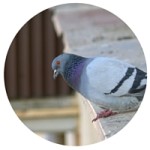
Bird populations are on the rise, and an interior bird issue can be more commonplace in the summer months. Birds become a greater threat to food facilities as they carry diseases such as salmonella, and can increase the potential for contamination if the bird reaches a sensitive area in the food plant.
As temperatures increase, there may be a greater temptation by employees to leave doors open for increased ventilation. Therefore, the time to consider your summer bird control strategies is not when the house sparrow flies through the door, as it will be too late. Performing exterior bird management is a critical component of preventing indoor occurrences. This includes educating your employees regarding the importance of keeping doors closed, and the correction of structural deficiencies to keep birds out.
Summer-Specific Bird Challenges
Bird problems have clear causes. Knowing why bird activity rises in summer helps you address the issue before it turns into a bigger problem for your operations.
Nesting season is at its peak. Many pest birds, such as house sparrows and European starlings, nest from spring through late summer. Once birds build a nest on your property, they are much harder to remove. They are territorial, persistent, and will come back to the same spot each year if conditions stay good.
Food sources are easier to find. Outdoor dining areas, open dumpsters, and spilled food near loading docks and silos attract birds. In summer, these attractants are more visible and disturbed more often, so more birds search for food near your building.
Doors and vents are often left open as temperatures go up. For birds, especially house sparrows, an open door is an easy way in. A bird inside a food facility is a serious compliance problem, and it usually starts with an outside issue that was not fixed soon enough.
Bird populations increase quickly. Feral pigeons, starlings, and sparrows breed rapidly when they have steady access to food and shelter. A small group in spring can turn into a much bigger problem by late summer if you do not take steps to keep them away.
For businesses in food processing, grocery, or food service, the health risks are even greater. Our pest control services for food processing and grocery stores are built to address these seasonal challenges.
Tips for Summer Bird Prevention
To start an interior bird prevention program, there are several steps plant managers can take:
- Inspect the exterior of the facility at least monthly. Look for evidence of pest birds such as droppings, feathers or nesting materials. Focus inspection efforts on finding those conditions which can provide food, water and shelter. Also inspect for access points such as openings around dock doors and levelers. The inspection must cover all areas of the plant exterior including ground level and roof. Use the information uncovered in the inspection to further educate staff and correct conducive conditions.
- Establish a regular clean-up schedule. Food is one of the major attractions for birds. Food spillage around dumpsters, silos and rail unloading areas are some examples of where birds may find food. Establishing a regularly scheduled clean-up is essential. Roofs and product accumulations in these areas should also be checked. Roof areas can be difficult to clean, especially if there is a gravel layer on top of a membrane roof. But product can be present in these areas through equipment malfunctions. Inspect both high and low for food sources and eliminate them.
- Eliminate accessible water sources. Water will also attract birds because it provides a readily available source of drinking water. Parking lot potholes, poorly designed drainage systems and other sources of standing water can provide the drinking water. Eliminate these sources whenever feasible.
- Evaluate structures and landscaping. The last conducive condition focus is harborage. Pest birds, like the English house sparrow, will readily build their nest in structures like gaps in exterior walls. Pigeons will seek harborage on ledges especially when there is some cover provided over the ledge. Inspect these nesting opportunities and seal them, or use bird management devices to repel or exclude birds. Bird netting is often used to exclude nesting areas like those found underneath overhangs and canopies. Landscaping should also be evaluated for its impact in providing nesting or resting opportunities. Although some municipalities may place certain requirements regarding landscape choices, trees with dense foliage and cover should be avoided. Consider pruning trees and shrubs to reduce attractiveness. Removal of the problematic vegetation may be the best solution where possible.
- Inspecting the building for openings which are vulnerable to bird entry is another important survey function. This includes, doors, windows and vents which do not seal properly or are intentionally left open.
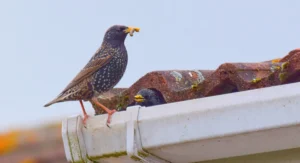
Actions To Take if Faced With an Interior Bird Problem
- Minimize food safety risks. This means isolating the bird from any exposed food or food contact surfaces. An example would be to keep all doors to packaging and production closed. Birds can carry a variety of pathogens including Salmonella. Keeping these highly mobile pests away from production and exposed food is critical.
- Use light management to try to encourage the bird to leave. Turn off the interior lights and open the doors. In addition, laser guns or noise can be used to help move the bird towards the open doors. These procedures should be done as soon as the bird enters. It is important not to let the bird become acclimated to its surroundings. If it becomes comfortable, lights and harassment strategies will be less successful.
- Trapping may be required if attempts to get the bird to leave on its own are unsuccessful. Mist nets are the most common deterrent methods used to trap and remove a bird. Nets can be installed on a permanent basis or rotated to areas based on the bird’s flight pattern. Either way, it will take time to observe bird movement and flight patterns. Use nets where birds are routinely flying and where subdued lighting may help hide the net. Birds will avoid nets if they can easily see them. Most nets are black in color but different color nets are available. Use a net which will be least visible in the surroundings in which it is placed. In some cases, multiple nets may be required to cover normal flight paths and potential escape routes. Mist nets will require time and skill to be effective. Nets must be constantly monitored to ensure captured birds are removed promptly.
- Before selecting a trapping or shooting method, consult state and local regulations regarding any applicable firearm ordinances or trapping restrictions. There will be some safety concerns which must be addressed when shooting birds with a pellet rifle. In addition some plants may have their own restrictions regarding the use of firearms on site. Most species of birds are federally protected. Identify the bird and make sure that whatever control method is selected will meet all legal requirements.
Read this Article from Food Manufacturing Magazine
Controlling Birds During the Summer Months
Frequently Asked Questions about Controlling Birds in the Summer
Why Is Bird Activity Typically Higher Around Businesses During the Summer Months?
In summer, the peak nesting season overlaps with more food sources and warmer weather, which often leads to doors and vents remaining open. Birds are busy raising their young, so they work harder to find and protect nesting spots. This means more birds, more often, closer to your building.
How Can Employee Behavior Impact Bird Activity in Warmer Weather?
Propped-open doors are a leading cause of bird problems inside commercial buildings. When employees leave dock doors, side entrances, or roof vents open for airflow, birds can easily get in, especially house sparrows, which can fit through very small gaps. Staff training and clear rules about door management are key parts of any summer bird prevention plan.
What Early Warning Signs Indicate a Potential Bird Problem at a Facility?
Watch for droppings on ledges, loading areas, or roofs; feathers or nests near vents, soffits, or wall gaps; and more bird activity around dumpsters or food storage. If you hear birds inside or find feathers indoors, it means an outside problem has already moved inside.
Why Is Regular Facility Inspection Important for Summer Bird Control?
Birds set up nests quickly, and once they habituate, they are much harder to remove. Monthly exterior inspections help you spot problems like food build-up, standing water, open ledges, or gaps before birds use them. Acting early is always cheaper than handling a large nuisance bird population later.
What Role Do Environmental Conditions Play in Attracting Birds to Commercial Properties?
Birds need food, water, and shelter. Commercial properties often offer all three: spilled food near loading areas and dumpsters, standing water in drains and potholes, and sheltered ledges, overhangs, or wall gaps for nesting.
Contact Your Local Bird Control Experts
Seasonal bird management is a specialized discipline. It requires expertise in bird biology and behavior, the ability to assess a site accurately, and the experience to design and implement effective, long-term programs. When executed properly, it protects your goods, reputation, and bottom line.
Whether you are dealing with pigeons on a loading dock, starlings in a warehouse, or sparrows nesting in signage, our technicians have the expertise to assist. Contact us to schedule a free pest inspection to get started.