

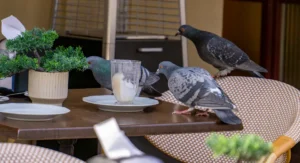
Birds are a common sight around commercial properties, and for most businesses, that’s where the problem starts. Whether it’s pigeons roosting on loading dock roofs, starlings nesting in warehouse rafters, or seagulls circling a retail center, pest birds can quickly become a serious operational and health concern.
Common Bird Issues at Businesses
Property damage is often the first concern. Bird droppings have uric acid that can eat away at roofs, metal, signs, and HVAC equipment. Nesting materials can block gutters, clog drains, and even create fire risks near electrical units.
Health risks are just as important. Research suggests that birds and their droppings are linked to over 60 diseases, such as histoplasmosis, cryptococcosis, and psittacosis. Dried droppings are especially dangerous because, when disturbed, they turn into fine dust that people can breathe in.
There’s also a real risk of slip-and-fall accidents. Bird droppings on walkways, loading zones, and entrances can make surfaces slippery, leading to injuries and expensive claims.
If you run a business in food processing, healthcare, retail, or warehousing, the risks are even greater. Visible bird problems can lead to failed audits, regulatory trouble, and damage to your reputation. Our pest management services for healthcare and warehouses are built to address these challenges.
Prevent access to food
The best way to keep birds away long-term is by removing their food sources. However, in crowded urban areas, this is rarely something one person can control.
If birds are causing issues around your business, try these first steps:
- Prevent access to nesting sites by installing barriers on window ledges and other common roosting spots.
- Keep food sources hidden to reduce their appeal.
- Secure trash can lids properly and avoid leaving garbage bags out in the open.
Immediate Action: What to Do When Birds Are Near Your Business
If you notice birds around your facility, it’s important to act quickly. A small roosting problem can get worse fast. For example, pigeons can breed year-round if food is available, and seagulls often return to the same nesting spots every year.
Prevent Access to Food
The best first step is to remove whatever is attracting birds. You may not be able to control every food source in a busy area, but you can take practical steps on your own property:
- Secure all trash receptacles with tight-fitting lids and avoid leaving garbage bags exposed outdoors.
- Clean up food waste promptly, especially in outdoor dining areas, loading bays, and dumpster zones.
- Remove standing water from flat roofs, gutters, and drainage areas. Birds need water just as much as they need food.
- Block access to nesting sites by installing barriers on window ledges, eaves, and other common roosting spots before birds establish themselves.
Commercial Bird Deterrent Services
Taking action at the first sign of bird activity can help prevent property damage and minimize their disruptions to your business. We offer a range of humane, non-toxic solutions to effectively manage nuisance bird populations. Our experienced technicians will evaluate your situation and recommend the most suitable approach.
Our bird control services include:
- Bird netting
- Bird spikes
- Electric deterrents
- Additional solutions such as gel applications, sensory deterrents, and bird repellers
Plan customization
Our bird control approach combines trapping, removal, and exclusion techniques to help manage bird activity while reducing property damage. Our specialists are trained to identify protected species and provide humane solutions.
Here’s what you can expect from our bird control services:
- A technician will contact you to schedule an on-site inspection at a convenient time.
- After evaluating the bird activity, they will recommend a customized treatment plan, including bird-proofing options and pricing.
- Resolving the issue may require multiple visits, and your technician will coordinate a schedule that works for you.
- Upon arrival, the technician will introduce themself and explain the treatment process before beginning work.
- After they’re done, they’ll provide expert advice on preventing future bird problems and making your property less appealing to birds.
Get in touch with McCloud Pest today at 800.332.7805 or visit our contact page to explore bird deterrent solutions like netting and other effective options.
Bird netting
Our bird netting solutions are designed to keep birds out, stopping them from nesting and roosting in restricted areas. Every installation is customized to suit your specific bird control needs.
Benefits of our bird netting:
- Immediate Impact – Birds are quickly discouraged and will relocate elsewhere.
- Tailored Installation – Netting is fitted to match your property’s unique layout.
- Dependable Coverage – McCloud Pest offers a one-year warranty on all netting installations.
- Budget-Friendly – A long-term, humane solution for managing bird activity effectively.
Electric bird deterrents
McCloud Pest’s electric bird deterrent offers an effective way to keep birds from gathering on roof peaks, beams, ledges, and other surfaces, helping to reduce potential property damage.
A specialized charger delivers a brief pulse along the track every 2-3 seconds, conditioning birds to stay away without harming them.
Benefits of our electric bird deterrents:
- Humane – Deters birds without injury.
- Versatile – Suitable for installation on various surface types.
- Low-Profile Design – Measures just 6 mm in height and comes in multiple colors to blend with your structure.
- Built to Last – Constructed from UV-stabilized PVC and stainless steel, backed by a five-year warranty.
Frequently Asked Questions About Bird Control
Why Do Birds Keep Returning to the Same Business Location?
Birds return to sites that reliably offer food, water, or shelter, and once established, that habit is hard to break. Effective deterrence means making the location consistently unappealing through a combination of exclusion, habitat modification, and ongoing monitoring.
What Are the Health Risks of Birds Around Commercial Properties?
Bird droppings can carry diseases, including histoplasmosis, cryptococcosis, and psittacosis. Dried droppings are particularly hazardous as disturbed particles can become airborne and be inhaled. For food businesses, healthcare facilities, and warehouses, this creates real compliance and liability exposure; if any staff have unexplained respiratory symptoms, consult a healthcare professional.
How Can I Tell If a Bird Problem Is Getting Worse?
Watch for increasing bird numbers, new nesting activity, growing droppings accumulations, or birds beginning to enter the building. Any of these signals that the situation needs professional attention. Our bird control and pigeon management services can assess the severity and recommend next steps.
Can Birds Cause Structural Damage to a Building?
Droppings contain uric acid that can corrode roofing materials, metalwork, and stonework, while nesting materials can block gutters and drainage systems, leading to water damage. The longer a bird problem goes unaddressed, the more costly the repairs can become.
Are There Legal Considerations When Dealing With Pest Birds?
Many bird species are protected under the Migratory Bird Treaty Act, which affects which control methods are permissible and when nests can be removed. Our technicians are trained to work in accordance with these regulations, using humane, compliant methods. Always consult a professional before attempting to remove nests or birds from your property.
McCloud’s Pest Expertise Can Help
Our bird control specialists have years of experience managing bird issues across various commercial properties. We use discreet, budget-friendly methods to address pest birds while prioritizing humane practices.
If birds are creating persistent issues on your property, reach out to us online or call 800.332.7805 for a free consultation. Our environmentally conscious solutions are designed for lasting results.