

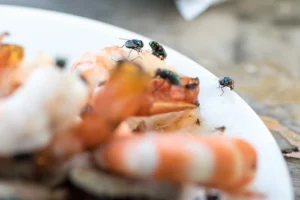
 More than a simple annoyance, flies are known to transmit dangerous pathogens like E. coli and Salmonella. For businesses, this creates major sanitation and safety concerns, potentially resulting in failed inspections and a damaged public image. Fly infestations can grow fast, and quick fixes such as sprays rarely address the real cause of the problem.
Trained fly management experts, like those at McCloud Services, target every stage of the fly lifecycle to ensure complete elimination.
What Are The Stages of a Fly’s Lifecycle?
Controlling a fly infestation is difficult due to how quickly flies reproduce. Their eggs can hatch into maggots within just two days, and under ideal conditions, they reach adulthood in about 10 days. Here’s a look at each stage of the fly lifecycle:
- Eggs: Female flies deposit their eggs on decomposing materials like animal carcasses, waste, spoiled food, or garbage. A single female can lay up to 900 eggs during her lifetime.
- Larvae (Maggots): Eggs hatch within about 48 hours into larvae, commonly known as maggots. These young flies feed on the decaying material they were laid on, rapidly growing in size.
- Pupae: After feeding for 4 to 7 days, the maggots enter the pupal stage. They burrow into the surrounding material and develop inside a hardened outer shell.
- Adults: Adult flies emerge from their pupal casings in a matter of days to a few weeks, depending on temperature and moisture levels. Once mature, they live for about 3 to 4 weeks and begin the reproductive cycle.
In warm temperatures, flies develop at an accelerated rate, becoming adults in just 10 days when it’s around 86°F (30°C). They thrive best between 75°F and 85°F (24°C–29°C), and if left unchecked, their population can surge.
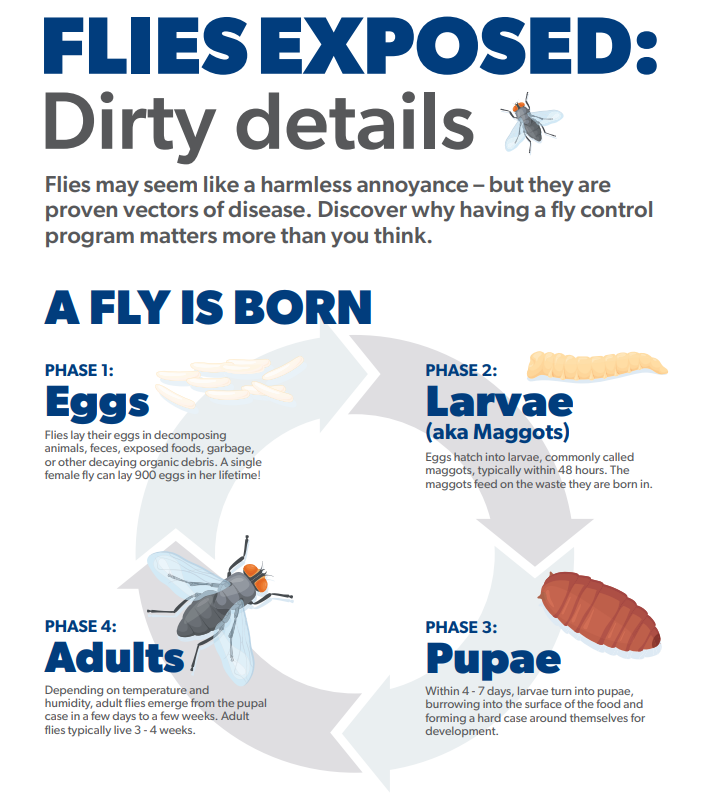
Flies Exposed: Dirty Details
Flies may seem like a harmless annoyance- but they are proven vectors of disease. Discover why having a fly control program matters more than you think.
Download Your CopyWhat Are The Feeding Habits of Flies?
Flies have an impressive ability to feed on both fresh and decaying matter, allowing them to survive in nearly any environment. This adaptability plays a major role in their persistence. Understanding what attracts them is crucial for effective control. Their food sources include:
- Garbage: Overflowing trash bins in homes and businesses provide flies with both abundant food scraps and favorable spots for laying eggs.
- Feces & Sewage: Animal droppings and sewage are not only rich feeding sources but also prime breeding grounds for flies.
- Decaying Matter: Organic waste in various stages of decomposition creates ideal conditions for fly feeding and reproduction.
- Decomposing Animals: Rotting carcasses offer dense nutrients that sustain flies during multiple phases of their lifecycle.
- Human Food: Leftovers and exposed dishes in kitchens, restaurants, and markets are frequent targets for hungry flies.
- Sugary Substances: Flies are drawn to sweet liquids like soda, fruit juice, and syrup for quick energy.
- Nectar: Flower nectar attracts flies with its high sugar content, providing a fast and accessible food source.
- Plants: Flies often rest and feed on plants, extracting moisture and nutrients from leaves and blossoms.
How do Flies Digest Food?
Adult flies are unable to chew because they have a specialized mouthpart known as a proboscis, which acts like a straw to drink liquids. When faced with solid food, they release enzyme-filled saliva to dissolve it into a liquid. This process allows them to absorb nutrients easily. Their method of feeding makes them highly attracted to sweet or decaying materials that soften quickly. This habit not only aids their survival but also increases their risk of spreading harmful bacteria.
What Are The Risks of Flies?
Flies collect harmful bacteria when they land on dirty surfaces and then carry those germs to places like kitchens and dining areas. Because they move freely between contaminated and clean environments, they can easily spread disease-causing pathogens. This can lead to foodborne illnesses with symptoms such as nausea, diarrhea, stomach cramps, and fever. The most effective way to reduce these risks is to keep flies out of your facility.
Proper sanitation and fly control are essential to protect health and safety.
How to Prevent Flies from Entering Your Building
One of the easiest ways to manage flies is by stopping them from getting inside your building. Flies often slip in through open windows, doors, and tiny cracks. Good sanitation practices are key to minimizing their presence. Here are some practical tips to help you begin:
- Manage Trash: Empty indoor and outdoor garbage cans daily. Make sure to tightly seal trash bags before disposing of them in outdoor dumpsters.
- Maintain Dumpsters: Arrange for regular emptying and cleaning of dumpsters. Replace them if needed and wash down dumpster areas frequently to prevent fly attraction.
- Close Entrances: Keep doors and windows closed when they’re not in use. For openings that must stay open, install screens or air curtains to block flies from entering.
- Seal Gaps: Partner with your pest control technician to find and seal any gaps around doors, windows, pipes, or other potential fly entry points.
- Use Light Traps: Set up insect light traps in areas where fly activity is high. Work with a pest control professional to ensure the traps are placed effectively.
- Outdoor Baiting: Collaborate with your pest control provider to develop an outdoor baiting program aimed at reducing fly populations around your facility.
What is Professional Fly Exclusion?
Stopping flies from entering your property is best achieved through professional fly exclusion. Our experienced pest control team utilizes cutting-edge methods to close off entry points, creating a strong shield against pests. Equipment such as fly screens, air curtains, and door sweeps provides dependable defense. Beyond keeping flies out, these measures contribute to improved facility sanitation.
We also identify and seal any gaps or cracks on exterior walls that could allow flies to enter.
Professional Pest Solutions from McCloud Services
Effectively controlling flies demands regular attention and upkeep. Handling the issue alone can be time-consuming and often ineffective, distracting you from your main business responsibilities. McCloud Services creates tailored fly control strategies for your business and provides continuous support to help maintain a fly-free environment.
Our experienced technicians locate and eliminate breeding sites, implement exclusion methods, and apply focused treatments to remove adult flies. By identifying hidden breeding grounds, we help prevent infestations before they start. Safeguard your Nashville facility with our reliable fly control solutions.
Reach out to McCloud Services today to book a fly control consultation with one of our skilled technicians.